
No Minimum Order Custom Shirts: Order Just One Piece
Table of Contents
- No Minimum Order Custom Shirts: How Single-Piece Ordering Works
- Custom Shirts One Piece: What You Can Order Without a Minimum
- Custom Shirt Design Upload: From Artwork File to Checkout
- Custom Shirt Printing Methods and How to Choose One
- Per-Shirt Pricing and Bulk Discounts on Custom Shirts
- Turnaround Time, Shipping, and Quality Checks
- Conclusion
- Frequently Asked Questions
Last Updated: October 14, 2026
No Minimum Order Custom Shirts: How Single-Piece Ordering Works
No minimum order custom shirts let you buy exactly what you need, whether that's one shirt for a gift or fifteen polos for a work crew.
Here's the part most shoppers get wrong. "No minimum" doesn't automatically mean "good deal." Some print shops advertise no minimums, then quietly triple the per-unit price on small runs. Others make you pay a setup fee that only makes sense at volume.
Below, we'll walk through how single-piece ordering works, what you can order, how to prepare your artwork, which printing method fits your design, and how to estimate your true cost before you check out. The U.S. Small Business Administration guide to buying supplies is a useful primer on comparing vendors before you commit.
Custom Shirts One Piece: What You Can Order Without a Minimum
Single-piece ordering covers far more than a basic tee. You can order custom shirts one piece at a time across a range of apparel styles, and you can mix sizes within a small run.
What's typically available with no minimum:
- T-shirts in short and long sleeve, unisex and fitted cuts
- Polos for staff uniforms and event teams
- Hoodies and sweatshirts for cold-weather merch or group gifts
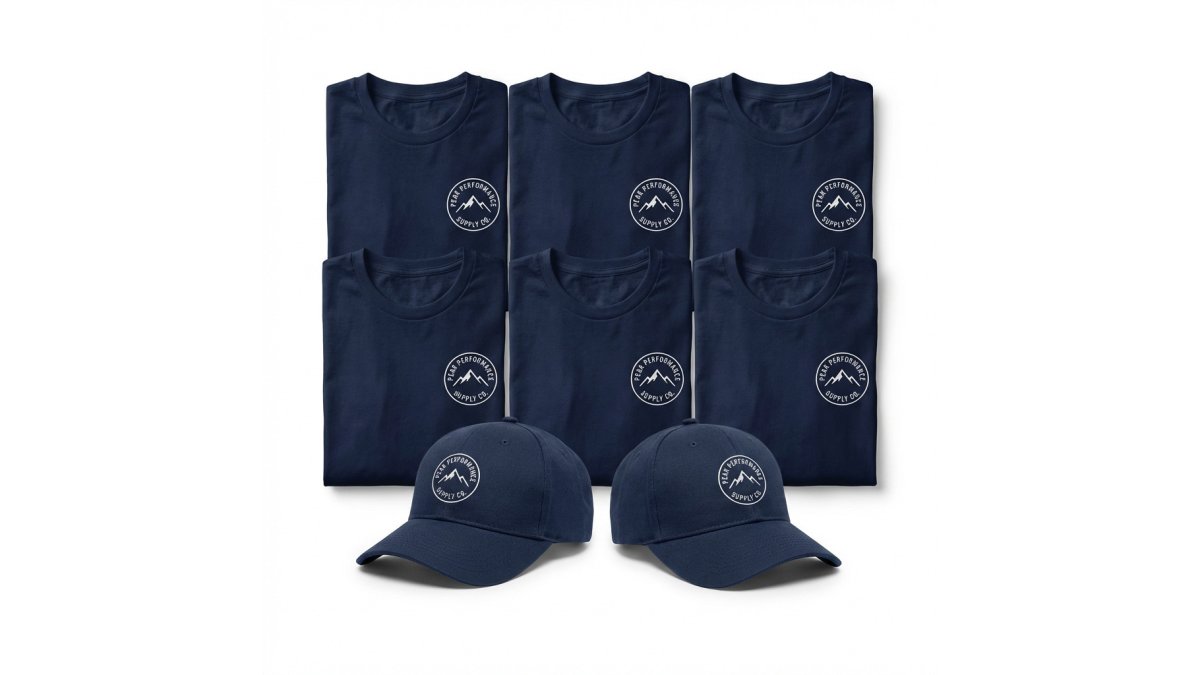
For a solo order, a single custom short sleeve tee is the simplest starting point. For small groups, bundled packages make more sense than buying piece by piece.

Custom Shirt Design Upload: From Artwork File to Checkout
Uploading your design is the step where most first-time orders go sideways. A clean file produces a clean print; a low-resolution image produces a blurry, disappointing result no matter how good the printer is.

Here's the practical path from file to finished shirt:
- Start with your best source file. A vector file (AI, EPS, PDF, or SVG) scales without losing quality. If you only have a photo or screenshot, use the highest-resolution version you own.
- Check resolution on raster files. For a print that looks sharp, aim for a file that holds up when enlarged to the print area. A logo pulled from a website header often won't.
- Set your colors. Decide whether you want a full-color print or a limited palette. Simpler designs print cleanly on more methods.
- Choose placement and size. Left chest, full front, back, or sleeve. Match placement to how the shirt will be worn.
- Preview the mockup. Most online designers show your design on the actual garment. Zoom in and check edges.
- Confirm a proof before the full run. Ask for a proof on any order where the design matters. Catching a typo on screen is far cheaper than catching it on 15 shirts.
File Requirements and Formatting Tips
- Vector files (AI, EPS, SVG, PDF) are ideal. They scale to any size with no quality loss.
- Raster files (PNG, JPG) need high resolution. Low-resolution images print soft and pixelated.
- Transparent backgrounds (PNG) prevent an unwanted white box behind your logo.
A common mistake is uploading a logo screenshotted from a website. That file was built for a screen, not fabric, and it will look fuzzy on a shirt. Track down the original if you can.
Custom Shirt Printing Methods and How to Choose One
The right custom shirt printing method depends on your design's complexity, the fabric, how many colors you're using, and how many pieces you need. There's no single best method, only the best fit for your job. Most ranking pages list the methods and stop there. This section goes further and explains the trade-offs, because the method you pick is the single biggest driver of how your one-off shirt looks and what it costs.
The three methods you'll see most often:
- Direct-to-garment (DTG) digital printing sprays water-based ink directly into the fabric. It handles full-color, detailed artwork well, including photos, gradients, and fine linework. There's no per-color setup, so it suits small runs and one-offs. The trade-off: DTG works best on 100% cotton and light-colored garments, and print durability depends heavily on the ink and pre-treatment used.
- Screen printing pushes plastisol or water-based ink through a mesh screen. Each color needs its own screen, so setup is front-loaded. At volume, screen printing delivers the boldest, most durable prints and the lowest per-unit cost. At low volume, that setup cost is spread across too few shirts to make sense.
- Heat transfer and vinyl press a pre-cut or pre-printed film onto the garment. It's the go-to for names, numbers, and simple one-color designs, and it's common on team jerseys and personalized gifts. It's fast and flexible for small counts, but multi-color photographic artwork isn't its strength.
How to Choose: A Decision Framework
Work through these questions in order:
- How many colors and how much detail? Full-color, photographic, or gradient artwork points to DTG. One to three flat colors points to screen printing or vinyl.
- How many pieces? One to about a dozen favors DTG or vinyl. Dozens and up favor screen printing on cost.
- What's the garment? 100% cotton and light colors are DTG-friendly. Dark garments and synthetics often need a different method or a base layer.
- How long will it be worn? For heavy repeat wear, screen printing's ink sits on top of the fabric and holds up well. DTG ink bonds into the fibers and can fade faster with harsh washing.
- What's the deadline? DTG and vinyl move quickly with no screen setup. Screen printing adds a screen-making step before production.
For a single shirt or a small group, DTG is almost always the practical pick. It gives you unlimited ink colors with no setup penalty, which is exactly what a no-minimum order needs.
Care and Durability by Method
How you wash matters as much as how it's printed. A common pattern is that heat and harsh detergent shorten the life of any print.
If print longevity is your top priority, say so when you order. A shop that stands behind its work will steer you to the method that fits your wear pattern rather than the one that's easiest to run.
Per-Shirt Pricing and Bulk Discounts on Custom Shirts
Per-shirt pricing falls as quantity rises, but the drop should be gradual, not a cliff. A fair no-minimum shop charges a reasonable single-piece rate and rewards larger orders with bulk discounts on custom shirts. The problem is that most pricing pages quote a headline number and hide the variables that actually move your total. Here's how the math really works.
Custom Short Sleeve T-Shirt – Personalized Print →
What Drives Your Final Cost
Four variables determine what you pay:
- Garment type and quality. A basic cotton tee, a ring-spun tee, a performance polo, and a hoodie sit at very different base costs. The blank garment is often the largest single line item.
- Print method. DTG has no per-color setup but a higher per-piece run cost. Screen printing has per-color setup fees that amortize across quantity. Vinyl is priced largely by the cut and press time.
- Number of print locations and colors. A left-chest logo is one location. Adding a full back print or a sleeve hit adds cost per location. More colors add cost on screen printing specifically.
How Pricing Typically Scales
| Order Size | Pricing Behavior | Best Fit |
|---|---|---|
| 1-2 pieces | Standard per-shirt rate, no setup amortization | Gifts, samples, one-off designs |
| 3-9 pieces | Slight per-unit drop as fixed costs spread | Small groups, families, hobby teams |
| 10+ pieces | Bulk discount applies | Teams, crews, events, fundraisers |
At K&M Print Works, a single custom short sleeve tee starts at $15.00, so you can test a design without committing to a full run. Once you cross into bulk territory, discounts kick in on orders of 10 or more items. That's the point where bundled packages usually beat buying piece by piece.
The Costs Beyond the Shirt
A per-shirt price is not your total. Budget for these:
- Setup or screen fees. Common on screen printing, usually per color. Often waived or absorbed on DTG and vinyl.
- Artwork or digitizing fees. Some shops charge to clean up or vectorize a low-resolution file. Supplying a print-ready file avoids this.
- Shipping. Varies by weight, destination, and speed. Rush shipping adds cost.
- Rush production charges. If you need it fast, expect a premium.
How to Compare Quotes Like for Like
When you get two quotes, make them comparable before you decide:
- Confirm the exact garment brand and style number, not just "a tee."
- Confirm the print method and number of colors.
- Confirm the number and size of print locations.
- Ask whether setup, artwork, and shipping are included.
- Ask for the total delivered cost, not the per-shirt rate.
If you're ordering for a team, the math is simple: buy only what you need, then reorder later. You're never stuck with dead stock sitting in a garage because you had to hit a minimum. And because reorders reuse your approved artwork and setup, the second order is often cheaper and faster than the first.
Turnaround Time, Shipping, and Quality Checks
Turnaround depends on the method, the order size, and whether you've approved a proof. Small digital orders move fastest; larger runs and screen printing take longer.
A realistic timeline for a no-minimum order:
- Proof approval: same day to a couple of days, depending on how many revisions you need
- Production: a few business days for small digital runs, longer for large orders
- Shipping: varies by destination, with nationwide delivery available
If you have a hard deadline, like branded polos for a team event next month, build in buffer time for the proof stage.
On quality, the honest test is how a print holds up after washing.
Conclusion
Ordering custom apparel shouldn't force you into a 50-shirt minimum you'll never use. The challenge is finding a printer whose pricing stays fair at one piece and scales sensibly when you need more.
K&M Print Works was built for exactly that: no minimums required, bulk discounts on orders of 10 or more items, and nationwide shipping from our Southern Ohio shop.
Frequently Asked Questions
Can you order just one custom shirt?
Yes. No minimum order custom shirts let you buy a single piece, so a solo order works fine for a gift, a sample, or a one-off design. You pick your shirt style, size, and print colors, upload your artwork, and check out like any other online order. There is no requirement to buy a pack of six or twelve, and you can reorder the same design later without starting over.
Are no-minimum custom shirts more expensive per shirt?
The per-shirt price on a single order is higher than on a large run because setup and handling are spread across fewer units. At K&M Print Works, a custom short sleeve t-shirt starts at $15.00, and bulk discounts apply once you reach 10 or more items. If you need 15 shirts, you pay the single-piece rate on the first nine and the discounted rate from the tenth item onward.
What printing methods work best for a single custom shirt?
Digital printing suits one-off orders because it needs no screens or setup plates, so a single shirt prints at a sensible price. It also handles full-color artwork and photos without charging per ink color. Screen printing becomes cheaper per unit at higher quantities, usually 24 pieces or more, which is why small orders and single pieces lean toward digital output.
How do I prepare artwork for custom shirt printing?
Send a high-resolution file, ideally 300 DPI at the print size, with a transparent background for logos. Vector files such as AI, EPS, or SVG scale cleanly to any size, while PNG and JPG work when the resolution is high enough. Avoid screenshots and images pulled from social media, since they blur when enlarged. If you only have a rough sketch, design assistance can clean it up before printing.