
How to Choose Branded Staff Uniforms That Last
Last Updated: October 30, 2026
Quick Summary
Choose branded uniforms by matching fabric and decoration to each role's daily wear, setting logo placement standards by garment type, and running a small pilot before full rollout. Order a buffer of roughly 10 to 15 percent of headcount per size as spares, and compare quotes on fabric weight and wash life rather than price alone.
- Center left-chest logos 3 to 4 inches below the shoulder seam and 3 to 4 inches from the center placket.
- Chest logos typically run 3 to 3.5 inches wide; full-back prints can run 8 to 12 inches wide.
- Hold spares of roughly 10 to 15 percent of headcount per size instead of ordering one shirt per person.
- Pilot with 5 to 10 staff wearing shirts through real shifts for two to three weeks.
- K&M Print Works offers no minimum order requirements and bulk discounts on orders of 10 or more items.
Table of Contents
- Start With Company Uniform Ideas That Fit Your Brand
- Pick Custom Work Shirts With Logo Options That Hold Up
- Get Logo Placement on Shirts Right the First Time
- Draft an Employee Uniform Policy Before You Order
- Size the Order and Budget for the Full Cost
- Run a Pilot and Roll Out Branded Uniforms in Phases
- Order Your Branded Staff Uniforms From K&M Print Works
- Frequently Asked Questions
Start With Company Uniform Ideas That Fit Your Brand
Branded uniforms work best when they look like they belong to your business, not like a catalog page. The shirts that get worn are the ones that match the company's actual personality.
Start with your brand guidelines. Pull the exact color codes and fonts your business already uses. A logo that looks sharp on a website can turn muddy on fabric, so check color matching against real swatches, not a screen.
Then ask three questions:
- What do customers see first: your logo, your face, or your name?
- Where will staff wear these most: indoors, outdoors, or both?
- Do you want a consistent look across roles, or a different color per department?
A branded uniform is staff clothing customized with your company logo and colors so employees present a consistent, recognizable look. It does more than dress a team. It builds customer recognition and gives staff a shared sense of identity.
Good company uniform ideas come from your daily work, not from a trend. A landscaping crew needs different garments than a front-desk team. Write down what each role actually does before you pick a single style.
Pick Custom Work Shirts With Logo Options That Hold Up
The garment you choose decides how long the logo lasts. A cheap shirt with a great print still fails after twenty washes.
Match the fabric to the job.
Then pick your decoration method.
And if you want to compare actual shirt-and-hat bundles before choosing, these custom branded polos for teams show five options side by side.
Watch out: choosing decoration by price alone often means reprinting within a year. Pay for the method that fits the wear, not the cheapest quote.
Get Logo Placement on Shirts Right the First Time
Logo placement on shirts is where most programs quietly go wrong. The print looks fine on a mockup and strange on a real body. The fix is not a better mockup. It is a repeatable approval process that runs from the first sample to the last reorder.
Set placement standards by garment type
Placement is not one number. It changes with the garment and the decoration method. Use these starting points and adjust for your logo shape:
- Left chest (polos, button-downs, tees): center the logo roughly 3 to 4 inches below the shoulder seam and 3 to 4 inches in from the center placket. A chest logo typically runs 3 to 3.5 inches wide so it reads at conversation distance without dominating the shirt.
- Right chest: mirror the left-chest position when you run a secondary mark or a name badge opposite the main logo.
- Full back: center the design between the shoulder blades, with the top edge about 2 to 3 inches below the collar seam. Back prints can run 8 to 12 inches wide because they are read from farther away.
- Sleeves: keep the logo at least 1 inch from the sleeve hem and 1 inch from the shoulder seam so it does not distort when the arm bends.
- Hats and aprons: center on the front panel or bib, and confirm the mark stays visible when the item is worn, not just flat on a table.
Build a sample-to-production approval checklist
A single proof is not quality control. Run this checklist every time, and keep a signed copy on file for each style and colorway:
- Decoration method fit. Embroidery holds up to repeated washing and gives a raised, professional look, but very small text can get lost in thread. Heat transfers and reflective transfers handle fine detail and bright colors well. Patches add a durable, textured option for workwear.
Control color and logo quality across reorders
Consistency breaks down at reorder time, when a new batch of shirts or thread arrives. If you run multiple locations, designate one person to own the approval checklist so standards do not drift from site to site.
Logo visibility depends on contrast and consistency. A mark that is placed well but printed in the wrong shade is still off-brand.
Use these starting placement points and adjust them for your logo shape.
| Placement | Position | Size |
|---|---|---|
| Left chest | 3 to 4 inches below shoulder seam, 3 to 4 inches from center placket | 3 to 3.5 inches wide |
| Right chest | Mirror the left-chest position | Same as left chest |
| Full back | Centered between shoulder blades, top edge 2 to 3 inches below collar seam | 8 to 12 inches wide |
| Sleeves | At least 1 inch from sleeve hem and 1 inch from shoulder seam | Not stated |
| Hats and aprons | Centered on front panel or bib | Not stated |
Draft an Employee Uniform Policy Before You Order
An employee uniform policy prevents confusion later. Write it before anyone places an order.
Cover the basics in plain language:
- Who wears a uniform, and on which days
- What the full outfit includes
- How staff request sizes and replacements
- How the company handles damaged or lost items
- What accommodations are available
Get staff input early. Employees who help choose fit and style accept the uniform faster. A policy nobody read is a policy nobody follows.
Keep enforcement fair and consistent. Uniform enforcement works when the rules are clear and the same for everyone. Build in an inclusive sizing range from the start, and note how staff can request adjustments.
Size the Order and Budget for the Full Cost
Order sizing is where budgets quietly grow. The sticker price is not the full cost. A shirt that costs more up front but survives two years of shifts can be cheaper than a bargain shirt replaced twice a year.
Build a total cost of ownership model
Price the program across its whole life, not just the garment line on the quote. A practical model has five cost buckets:
- Base garment and decoration. The quoted per-item price for the shirt plus embroidery, transfer, or patch work.
- Buffer and spares. Extra units for new hires, damage, and loss. A common pattern is a buffer of roughly 10 to 15 percent of headcount per size, held as spares rather than ordered one-for-one.
- Laundering and care. If the company launders uniforms, add the per-load cost and the labor to sort and return them. If staff launder at home, note the care instructions so shirts are not ruined by hot water or high heat.
- Replacement and replenishment. Estimate how often each garment wears out based on the role. A trades crew may need replacement far more often than a front-desk team.
- Administration. The time to size staff, collect requests, track inventory, and process reorders.
Plan procurement around lead time and reorder points
Procurement planning is what keeps the program from stalling. Work backward from your start date:
- Confirm decoration lead time with your supplier, including proof approval and shipping.
- Set a reorder point for each size, such as when spares for that size drop below two units.
- Keep the approved sample and color records on file so a reorder matches the original run.
- Review the size mix once a quarter and adjust the buffer as headcount changes.
Weigh purchase price against wear life
A cheap shirt with a great print still fails after twenty washes. When you compare quotes, ask each supplier for the fabric weight, the decoration method, and the expected wash life. Heavy-duty denim and hard-wearing cotton blends suit trades and outdoor crews, while lighter knits work for offices and events. Pay for the method and fabric that fit the wear, not just the cheapest quote.
Run a Pilot and Roll Out Branded Uniforms in Phases
A pilot protects you from a costly mistake. Test the uniform with a small group before a full rollout.
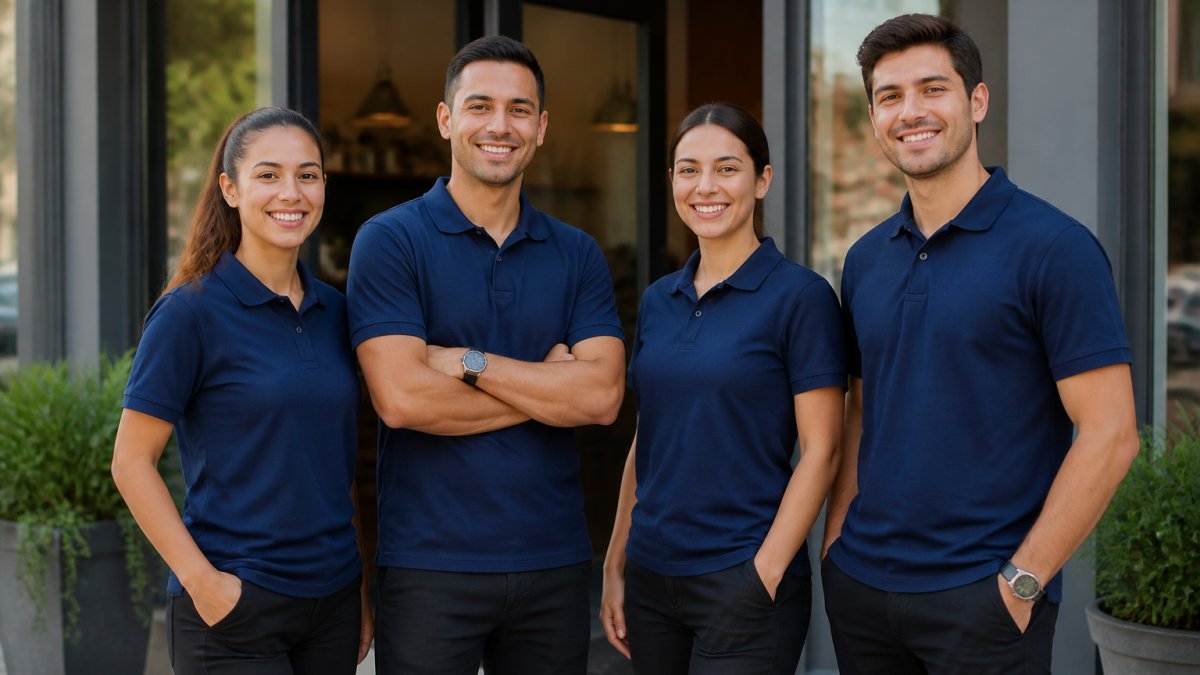
Here's a rollout plan that works:
- Pick 5 to 10 staff across roles to test fit, comfort, and durability.
- Have them wear the shirts through real shifts for two to three weeks.
- Collect feedback on fit, fabric, and how the logo holds up.
- Fix what's broken before the full order.
- Roll out in phases by team or location.
Order Your Branded Staff Uniforms From K&M Print Works
The right uniform program comes down to fit, durability, and a clear plan. Get those right and your team looks sharp, your brand stays consistent, and staff actually wear the shirts.
K&M Print Works makes that easy. We offer no minimum order requirements, so a small crew isn't stuck overbuying. We give bulk discounts on orders of 10 or more items, and we ship nationwide from Ohio.
Ready to dress your team? Start with our Premium Bulk package for large teams and company-wide branding, or browse smaller bundles for a growing crew. Start with our Premium Bulk package for large teams and company-wide branding, or browse smaller bundles for a growing crew.

Frequently Asked Questions
How do you choose uniforms employees will actually wear?
Ask staff about fit, fabric and sleeve length before you commit to a design. Order a small pilot batch first, then collect feedback after two weeks of wear. Comfort drives acceptance more than color or logo size. A pilot lets you fix problems before a full order.
Where should a company logo go on a uniform?
The left chest is a common spot for branded uniforms because it sits at eye level. Larger back prints suit events and field crews where people are seen from a distance.
How many uniform pieces should each employee receive?
Most staff need at least three tops so one can be in the wash while two are in rotation. Full-time employees who work five days a week often need four or five. Count your headcount and add a buffer for new hires and replacements.
How do you order branded uniforms for a team with different sizes?
Collect sizes yourself rather than guessing, using a simple form with chest and length measurements plus a note on preferred fit. Ask whether each person wants a relaxed or fitted cut. Build the full size breakdown from the collected measurements.
Dressing a team well takes a little planning up front, but it pays off in how customers see you and how staff feel on the job. K&M Print Works can handle the printing, the sizing, and the reorders so you can focus on running your business. Get started with K&M Print Works and give your team a look they'll be proud to wear.
